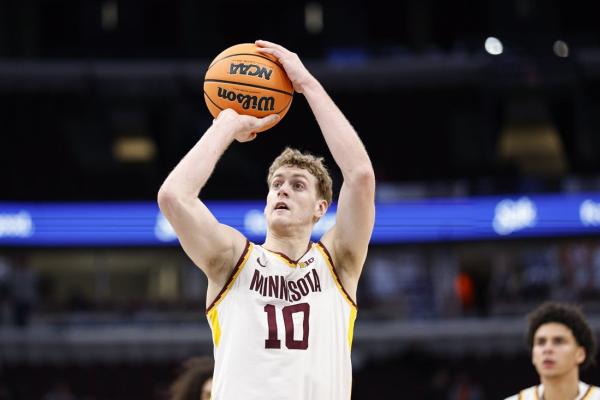
A collection of 11 athletes from around the country and across multiple sports have filed a class action lawsuit against the NCAA, challenging its new eligibility rules.
In a federal lawsuit filed Friday in U.S. District Court for the State of Colorado, the group, which includes Minnesota basketball player Cade Tyson and Northern Colorado basketball player Brock Wisne, alleged the NCAA’s new rules unlawfully deny thousands of athletes additional eligibility, preventing them from Name, Image and Likeness (NIL) opportunities in the process.
The NCAA had changed its eligibility rules earlier this summer, applying an across-the-board five-year window for all athletes, but did not apply the rule to athletes who had recently exhausted their eligibility in 2025-26, specifically those who could gain a year of competition under the new guidance.
The lawsuit alleges that thousands of athletes have been unlawfully denied a fifth year.
“These athletes aren’t asking for special treatment,” said Rob Shelquist, a partner at Cuneo Gilbert Flannery & LaDuca, LLP. “They’re asking to not be singled out and excluded from the NCAA’s eligibility framework. The NCAA updated the rules but refused to apply them only to the very group that was most immediately affected.
“If the NCAA has determined that five years of eligibility is the fair rule for college athletes, then athletes who would still be eligible but for completing four years of eligibility should not be deprived of the same educational, athletic, and NIL opportunities.”
In addition to Tyson and Wisne, the named plaintiffs include athletes from across four different sports (men’s and women’s basketball, baseball and track and field): Arizona State’s Anthony Johnson, Radford’s Louie Jordan, California State’s Jefferson De La Cruz Monegro, South Florida’s Isaiah Jones, Boston College’s Aidan Shaw, Penn State’s Dimond Loosli, Seattle’s Jake Morell, Robert Morris’ Aislin Malcolm and Long Island’s Abigail Jefferies.
A favorable ruling for the plaintiffs could effectively nullify the NCAA’s new rule or conversely strengthen it, should the ruling swing the other direction. Additionally, it might offer additional clarity and strengthen the NCAA’s position in other lawsuits ongoing at the state level over the same rule.
Last week, an Ohio judge ruled in favor of 24 athletes in one of those state cases, though in the aftermath an NCAA cabinet stated publicly that “we do not intend to change course.”